The answer disappears
The response that drove a decision vanishes with the chat window, leaving nothing durable for a dispute, audit or post-mortem.
A complete enterprise knowledge-management platform
Answer of Record Inference Engine
AORIE (Answer of Record Inference Engine) runs enterprise knowledge end to end: govern the corporate corpus, let staff search and ask against it, surface contradictions—and prove every answer afterwards.
Answer of Record Inference Engine · Answers with receipts · Built on the AEI grounding engine
Every answer ships grounded, verified, chained, signed and independently checkable.
A knowledge estate under management, not a wiki under dust.
The enterprise problem
A wrong answer about policy, contract terms or procedure is not a disappointing chat. It is an incident—and most AI leaves nothing reliable behind.
The response that drove a decision vanishes with the chat window, leaving nothing durable for a dispute, audit or post-mortem.
Policies supersede, disagree and drift. A fluent model can repeat those contradictions without showing where they began.
Text hidden inside a document can steer a naive model through prompt injection using the very knowledge base it serves.
Knowledge AI stalls at the control boundary while staff continue pasting confidential questions into ungoverned tools.
Finding five documents is not the same as producing one supported answer. Interpretation remains inconsistent and unrecorded.
The complete knowledge platform
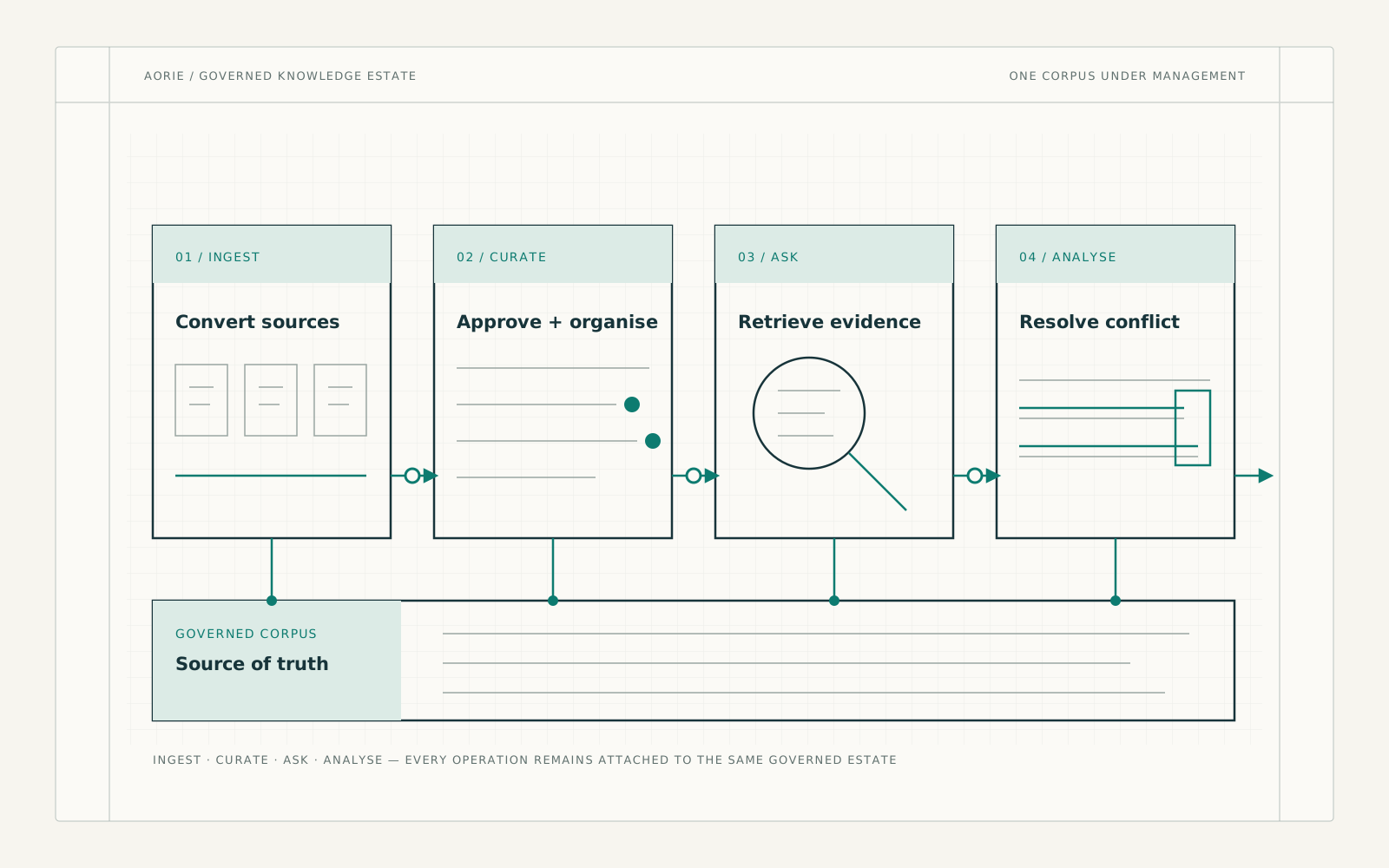
AORIE treats organisational knowledge as a governed operating asset—from first ingestion through analysis, use and audit.
In practiceGive knowledge owners one place to bring in, organise, approve and retire the sources the organisation relies on.How it worksConvert and embed documents, then give knowledge owners a place to approve, organise and retire sources rather than leaving the corpus as an unmanaged folder tree.
In practiceSee what the approved material covers well and where a missing source needs to be written or found.How it worksSee what the governed corpus does and does not know. Gaps become manageable findings before staff discover them inside a consequential answer.
In practiceAsk one question, receive a supported answer and open the exact passage behind it.How it worksStaff can search globally, ask a grounded question and open the underlying source with the supporting evidence highlighted in context.
In practiceSurface places where documents disagree and turn each conflict into work someone can own and resolve.How it worksAORIE structures unstructured material and surfaces disagreement across documents. Findings can be reviewed and worked as a queue rather than discovered during an incident.
In practiceReview what happened, compare versions and export a record that legal, risk and audit teams can use.How it worksReceipts, evidence views, document comparisons, digests, exports and retention controls support the way knowledge, legal and compliance teams investigate and report.
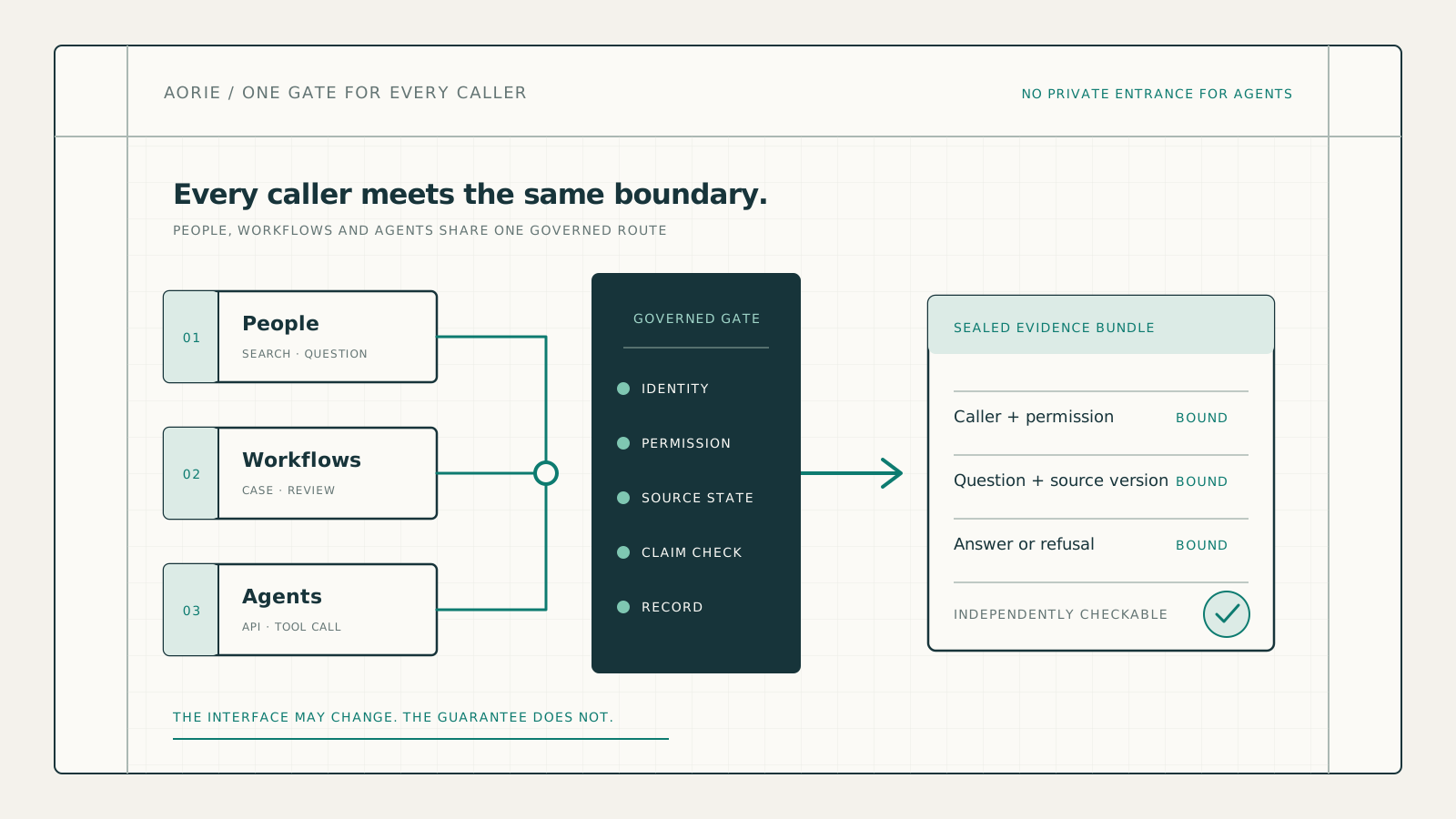
In practiceLet approved systems and agents use the same governed answers without giving them a private route around the controls.How it worksAPI keys, usage visibility, tenant isolation and Model Context Protocol access allow enterprise tooling and agents to consume the same governed answers.
The knowledge lifecycle
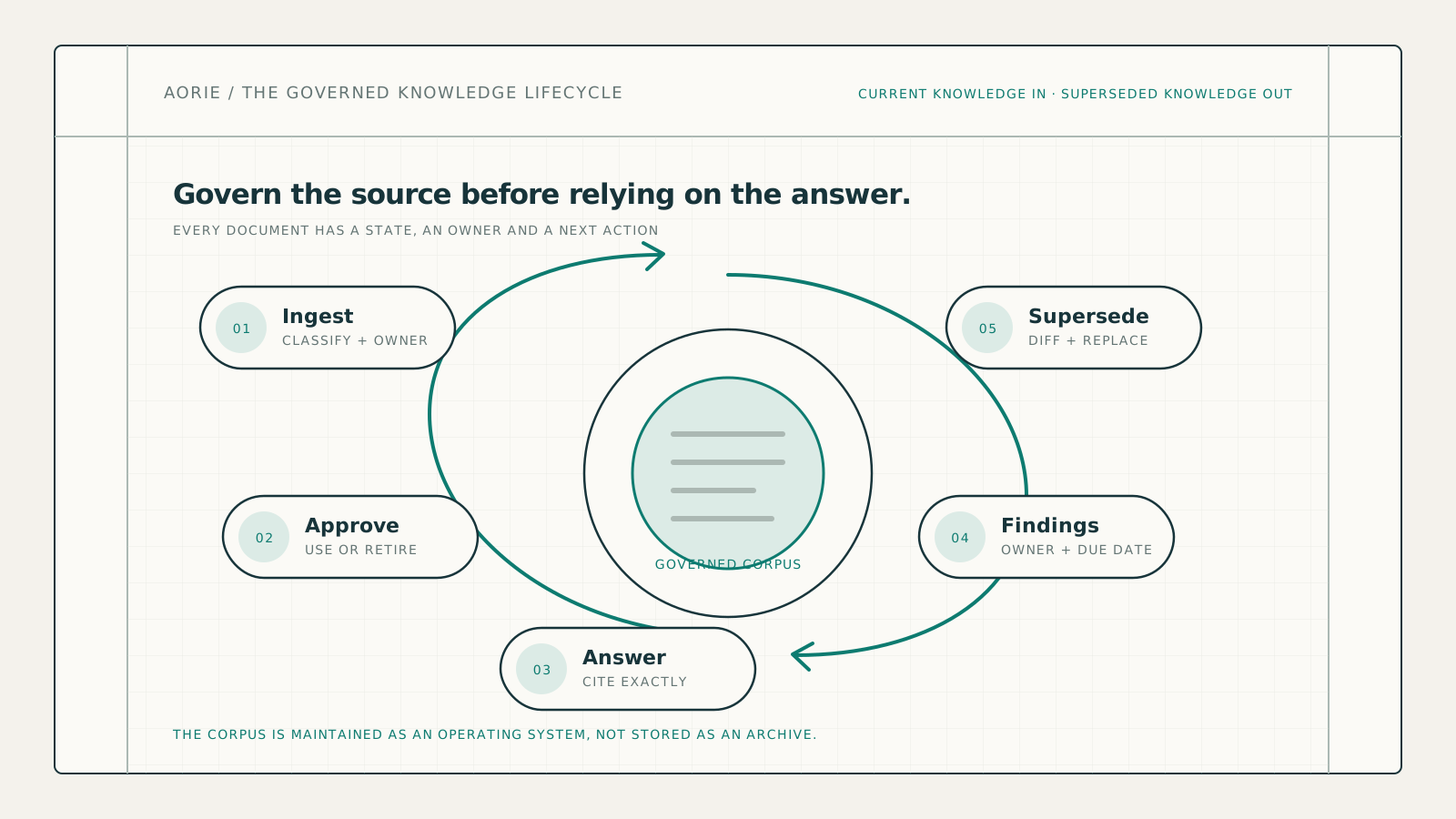
Documents enter with an owner and a state. They are approved, cited, reviewed through findings and superseded when they change. The knowledge estate behaves like a maintained operating system, not a folder that quietly ages.
AORIE in motion
Approve the right material, find gaps and disagreements, answer from the current source and keep a record you can prove later.Source lifecycle, coverage, findings, supersession and independently verifiable answer records operate as one governed knowledge system.
Each short scene shows one job the platform takes care of and the useful result it leaves behind.Each loop isolates one workflow, its state change, its control boundary and the record it produces.
Search and conventional knowledge bases
Search returns documents for staff to reconcile. A conventional knowledge base cannot show where the corpus contradicts itself or preserve the exact answer someone acted on.
AORIE
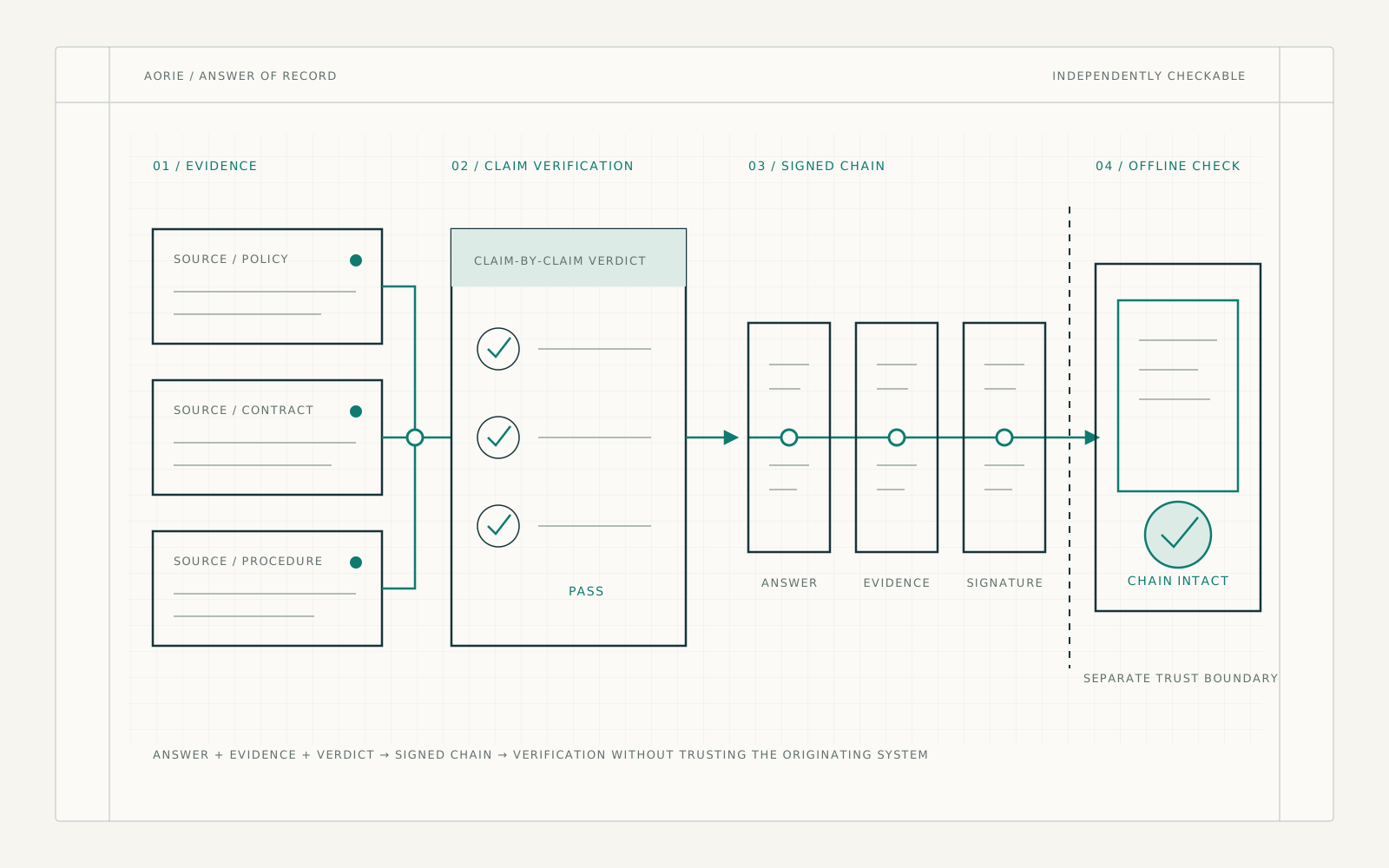
In practiceAORIE manages the knowledge before it answers from it. Staff get one supported response, and the organisation keeps the sources and history needed to stand behind it.How it worksAORIE runs the whole knowledge estate, then returns answers grounded in it, verified claim by claim, cryptographically chained, signed and checkable by an auditor who does not trust us.
Built for consequential knowledge
For knowledge, compliance, risk and technology leaders who need speed without losing the ability to explain a decision later.
Knowledge and operations
Give staff a consistent synthesis while preserving the exact sources and versions behind it.
Compliance, risk and legal
Review evidence, trace policy versions and independently confirm the integrity of the record.
Where this is used
Six industries that all have to produce the answer later. Choose the setting that looks most like your Tuesday morning.
01 / Law firms and in-house legal
A third-year associate is drafting and needs the firm's position on a clause type it has taken a view on before. That view exists—in closed matters, in the precedent bank, in a memo from 2023, and in the head of a partner who is currently in court.
They search the document store, open the results that look closest and reuse language from a matter they were not on and cannot fully assess. Or they ask whoever is nearest and free. What it costs is rarely dramatic and always expensive: advice that drifts between teams, work redone at partner rates and no way to reconstruct what the associate relied on when they drafted it.
With AORIE
Every answer is recorded with its sources. If advice is questioned later, what the drafter was told—and what it was based on—is still there.
02 / Financial services
A first-line colleague takes a customer question close to a boundary: what a product covers, whether a fee applies, what can and cannot be said. The answer lives across product terms, a policy library and last quarter's briefing note.
They ask the person next to them. That person is confident and usually right. Two desks away, someone answers the same question differently, also confidently. This inconsistency is invisible until it becomes the subject of a review. When the question comes—what were staff told, and when?—the answer is usually reconstructed from training decks and memory.
With AORIE
The record is not a byproduct here. It is the thing that makes the answer defensible.
03 / Accountancy and audit
A treatment question comes up mid-engagement. The answer depends on the standard, the firm's methodology and how the firm handled something comparable two years ago.
The junior asks the senior. The senior asks the manager. The manager asks the technical partner, who has answered this exact question dozens of times and will answer it again next month. The reasoning reaches the file as a conclusion, not as a chain. Then file review asks what the basis was for this judgement—and that basis has to be rebuilt from memory and email.
With AORIE
The reasoning reaches the file with the conclusion, ready for review.
04 / HR and people teams
An employee asks about family leave, a redundancy consultation step or how a grievance proceeds. It is a reasonable question with a definite answer.
The answer sits in a policy updated eleven months ago, an intranet page that was not updated with it and a manager's recollection of how it went last time. HR answers in good faith. The employee acts on the answer. The serious part is the variance: two employees in similar circumstances receive different answers, and later nobody can establish what either of them was told.
With AORIE
The answer trail preserves what was asked, what was answered and which policy version supported it.
05 / Insurance
A claims handler decides coverage. The policy has a base wording, endorsements and a version history—and the version that matters is the one in force on the date of loss, not the one currently on the intranet.
Handlers develop instincts and those instincts are mostly right. But wordings change, endorsements accumulate and the handler is working at pace. When a complaint arrives later, the question is which wording was applied and what the handler was working from at the time. That is often unanswerable.
With AORIE
When a complaint arrives, the file already contains what the handler was told.
06 / Regulated manufacturing and life sciences
An operator or QA reviewer needs the current procedure. Procedures are controlled, versioned and changed under a formal process—which is exactly why the wrong version is so easy to be holding.
In practice, people work from what is to hand: a printed copy, a local file or an experienced colleague's account. Usually it matches the controlled version. Occasionally it does not. When a deviation is investigated, the question is what procedure was in force and what the person was actually working to. The gap between those two is where the investigation lives.
With AORIE
The answer and its source record are ready when the procedure is later examined.
Six industries, one shared constraint: each has to produce, later, the answer someone acted on. AORIE is built for that later moment.
One gate for every caller
People, internal workflows and software agents all meet the same identity, permission, source and claim checks. The interface may change, but the governed route and its evidence record do not.
Questions from the control functions
AORIE's strongest claims are deliberately falsifiable. The evidence should be inspectable by people who do not take our word for it.
Search returns documents; staff still synthesise the answer inconsistently. AORIE returns the synthesis with evidence attached and refuses where the corpus cannot support one.
A knowledge base stores what people publish. AORIE also shows what the corpus does not cover, where sources contradict each other and what was actually answered from them.
Then the answer is wrong traceably. Its receipt identifies the source that produced the claim, making correction possible. Contradiction finding is designed to surface that class of problem earlier.
The standalone verifier checks the record format independently and offline. Verification does not depend on trusting AORIE's own application.
AORIE
We will show you how AORIE grounds it, verifies it, records it and makes the receipt independently checkable.
Enterprise knowledge management · Answers with receipts